
After the Dashboard: Where AI Visibility Goes Next
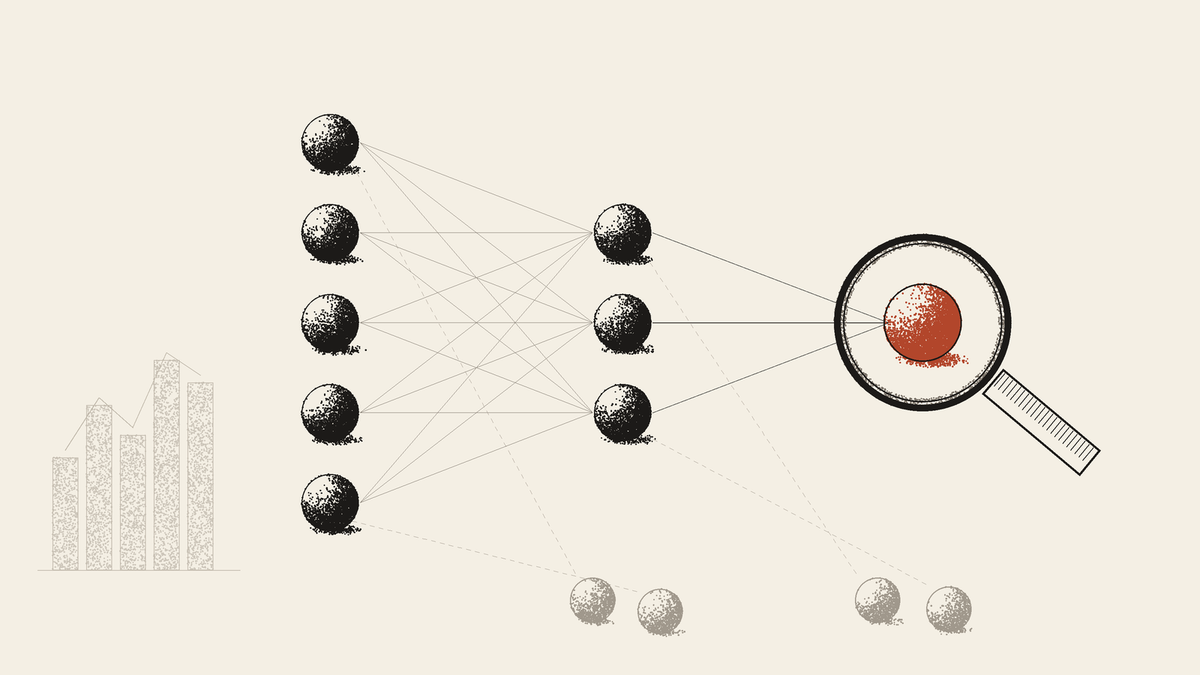
Basic AI visibility tracking is becoming a free feature. The value in this market is moving to a harder question: whether AI assistants and agents choose a brand, and what that choice is worth.
The question brand owners are now asking
After two years and several hundred million dollars of venture investment, the AI visibility category is splitting in two. Tracking how often a brand appears in ChatGPT, Gemini or Perplexity has become a commodity. The best funded pioneers are moving on to AI marketing, automated content creation and advertising.
The SEO community has drawn its own conclusion. AI search, it argues, was always an SEO discipline, and good SEO is good GEO.
Brand owners are drawing a different one. Marketing directors who bought visibility dashboards in 2025 are being asked by finance to justify the renewal. They can show a share of voice chart. They cannot show what it did to revenue, and their vendors offer no credible route to attribution.
That gap between what the category measures and what the buyer pays for is where the next phase of this market will be decided.
Where the money went
The capital is heavily concentrated. Dealroom counts seven venture-backed startups founded since 2024 that have raised $472 million between them, most of it in one company. Add the later stage platforms and adjacent players tracked by ThriveStack and GEO Compass, and disclosed funding rises to roughly $600 million. That second figure is our own tally. It counts announced venture rounds for companies whose main product is AI visibility, GEO or AI search content, and excludes acquisition prices, valuations and SEO platforms that have added AI features.
Most of that capital sits with Profound, about $335 million of Dealroom's total. It raised a $180 million Series D at a $1.8 billion valuation in September 2026, according to Everything-PR. Its product roadmap tells the more important story. Profound has added agents that produce content, a planning tool for visibility work and an ads studio for buying placements on AI search platforms. The valuation shows investor confidence in the company. The roadmap shows where that confidence is placed: the category leader is spending its capital on optimisation and media.
Consolidation points the same way. Adobe completed its acquisition of Semrush in April 2026, and Sitecore bought Scrunch in June for a reported $225 million. HubSpot gives away an AEO grader. More than 80 tools now compete to show a brand how it appears in AI answers, many priced below $100 a month.
When basic visibility tracking becomes a free feature inside a marketing suite, the standalone business model comes under pressure. The remaining question is what additional evidence buyers will pay for, and what decisions it allows them to make. That pressure explains why the pioneers are moving into optimisation and advertising.
How far good SEO takes a brand
The SEO community is right about one layer of the problem. When an assistant searches the web before it answers, it retrieves and cites pages much as a search engine ranks them. Crawlable content, clear structure and authoritative sources help. For that retrieval layer, good SEO is good GEO.
Retrieval decides whether a brand gets into the conversation. It says little about what happens next, especially in high-consideration purchases where buyers question an assistant over several turns before deciding. AIVO's research points to a later decisive moment, when the user narrows the field and asks the assistant which option to pick. We call this the point of choice: the stage at which an assistant moves beyond describing the available options and makes a final recommendation. The gap between being visible and being chosen is the subject of our working paper Beyond Visibility, based on 1,427 brand probes across 10 industries. In that sample, 87.3% of brands named at the first turn had been displaced by a competitor by the fourth. The same pattern recurs across our wider research base of more than 25,000 multi-turn probes and 380 brands. At the point of choice, the model draws on what it has already learned about the category, on reviews and third party judgement, and on how it weighs one brand against another.
A brand can be cited often and still lose that final recommendation. Traditional SEO remains useful but is not sufficient. Reviews, product data and third party references also shape the outcome, and their influence cannot be inferred from a website audit alone. AI agents that compare, shortlist and transact on a user's behalf make the decision stage even more important, and even further removed from anything an SEO audit measures. A recommendation is also short of a sale. The user can reject it, and an agent may fail to complete the purchase. AIVO describes the journey as three gates: access, where GEO and AEO do their work; choice, where the recommendation is won or lost; and execution, where the agent completes the task.
Three layers, three different businesses
The market is separating into three layers, each with different economics.
Tracking. Counting mentions, citations and share of voice across AI assistants. This layer is being absorbed into SEO and marketing suites, where it is increasingly bundled or given away. It will remain useful as an input. It will not support standalone valuations.
Optimization. Producing content, managing placements and buying ads inside AI answers. This is where the best funded pioneers are heading, because it reaches existing content and media budgets. The risk is structural. OpenAI began running ads in ChatGPT in February 2026, following an announcement reported by MarketScreener, and the company that owns the inventory tends to shape how performance is reported.
Outcome measurement. This layer begins with a more immediate question: which brands does an AI assistant recommend when a customer is ready to choose? The next task is to establish whether interventions change that result, and whether the change produces incremental commercial value that a chief financial officer can underwrite. Outcome measurement needs independence from the commercial activity it evaluates. When a platform sells the advertising and controls the reporting, buyers need independent evidence to assess whether the reported results reflect genuine improvements in brand choice and commercial outcomes. Earlier media channels developed independent measurement and verification for the same reason. An independent measure can also compare competing interventions, whoever delivers them, without a stake in which one the buyer picks.
Several vendors and researchers are working on parts of this layer, but none has yet become the accepted independent measure for it. It is the layer that answers the brand owner's ROI question, and the one the venture money has so far largely passed over.
Attribution, and the agentic clock
Click-based attribution will not rescue the dashboard. Most AI answers end without a visit to the brand's site, so referral traffic captures a small and unrepresentative slice of the influence. Connecting AI exposure to revenue will take the methods marketers already trust for channels they cannot click through: controlled tests, incrementality studies and marketing mix models that treat AI recommendation as a measured input.
The window is narrowing. As AI platforms move from answering questions to executing purchases, they are gaining control of more of the transaction data. Independent measurement conventions need to develop before the platforms' own reporting becomes the default basis for judging performance.
Transaction records alone will not show what caused a purchase, so independent measurement will remain possible. What is at stake is which source the industry treats as the reference. Shared conventions for counting AI-driven traffic and outcomes, audit by recognised industry bodies, and valuation methods that finance teams accept are the work of this window.
What brand owners should ask for now
Venture investors remain committed to this category. They are backing the move into optimisation and advertising, and Profound's latest valuation shows they still believe in it. The return problem sits with the buyers, who were sold visibility when what they needed was evidence of sales.
Brand owners renewing AI search budgets in 2027 can ask three questions of any vendor. Does it measure whether AI assistants recommend our brand when a customer is ready to choose? Can it show how that recommendation rate moves when we act? Is the measurement independent of anyone selling us AI media?
Visibility will remain an input to marketing. Optimization will remain a source of competitive advantage. But brand owners need an independent measure of which brands AI systems choose, how that choice changes, and whether the change creates commercial value. That is the measurement layer AIVO is building, within the wider discipline of Agentic Brand Control, with AI Win-Rate™ at its centre. AI Win-Rate™ measures the share of qualifying head-to-head decisions, in multi-turn and agentic AI conversations, that a brand wins as the final recommendation. Its scoring rules and the minimum precision required before a score is reported are set out in the published AI Win-Rate Methodology v2.0.
AIVO also runs improvement programs, so the same separation applies to us. The methodology is published and versioned, and clients have no input into how their scores are calculated or reported. Whether a higher AI Win-Rate™ produces more sales is the question our AI Win-Rate Study is now testing with an independent marketing scientist and a founding cohort of brands.
AIVO is an AI Brand Intelligence company. GEO gets brands seen by AI; AIVO measures and improves whether AI assistants and agents choose them, with AI Win-Rate™ as the headline measure.
#AIBrandIntelligence #AgenticCommerce #MarketingMeasurement
Sources
Dealroom, Generative engine optimization startups: funding and exits in 2026
Everything-PR, Profound valuation: $180M Series D at $1.8B
ThriveStack, AI visibility tools 2026: 50+ vendors compared
GEO Compass, Who funds GEO
GEO Compass, The GEO and AI-visibility tooling market in 2026
E-commerce Fastlane, AI visibility tools 2026: 83 GEO and AEO platforms
MarketScreener, OpenAI introduces advertising in ChatGPT for US users
AIVO Standard, Beyond Visibility, working paper, Zenodo
AIVO Meridian, AI Win-Rate Methodology v2.0, Zenodo
When customers ask AI what to buy, does it choose you?
AIVOCORP
Comments ()