
Equip the Bartender
Why AIVO, Inc. agrees with Mark Ritson that brands don't need to market to AI agents, and what they should do instead
Two audiences, or one?
A recent Fast Company contributor article, from its Executive Board network, welcomes the era of B2A: business-to-agent marketing. It argues that every brand now has two audiences, the human customer and the AI agent. To its credit, it treats B2A as part of existing marketing rather than a separate function. But we think the two-audience framing confuses an intermediary with a customer.
Mark Ritson argues that brands don't need to market to AI agents. We agree.
What Ritson actually said
In his June column for The Drum, Ritson described asking Claude what to drink after a Campari spritz in the south of France. The answer reached straight for the Negroni family, and for Campari. His point was bigger than cocktails. The old prediction that perfect information would kill brands failed with online reviews, and it is failing again with AI agents. Agents are not blind to brands. They are obsessed with them.
The mechanism is simple. Models learn from the web, so the brands that are mentioned most, and most favorably, are the ones they learn to trust. As Ritson put it: "Fame is not a soft asset to an LLM. It is the data."
At The Drum's Marketing Clinic in July he went further, rejecting the idea that shopping agents will act independently of people or strip out familiar purchase signals. They behave, in his words, "spectacularly like humans."
The conclusion follows. If agents reward what people reward (fame, mental availability, distinctiveness), there is no second audience to persuade. Established brands start with an advantage.
Why we agree
An AI agent is not a new customer. It is a new intermediary acting for the same customer. The customer's needs, the moments that trigger a purchase and the reasons to choose one brand over another are unchanged. The agent is doing the slog of research on the shopper's behalf; the shopper still makes the call.
Treating the agent as a second audience invites a second voice: copy written for the machine rather than for the customer the machine serves. An agent that reads both will notice the difference.
The brand-building job Ritson has defended for twenty years is still the job. Nothing about agents changes it.
Equip the bartender
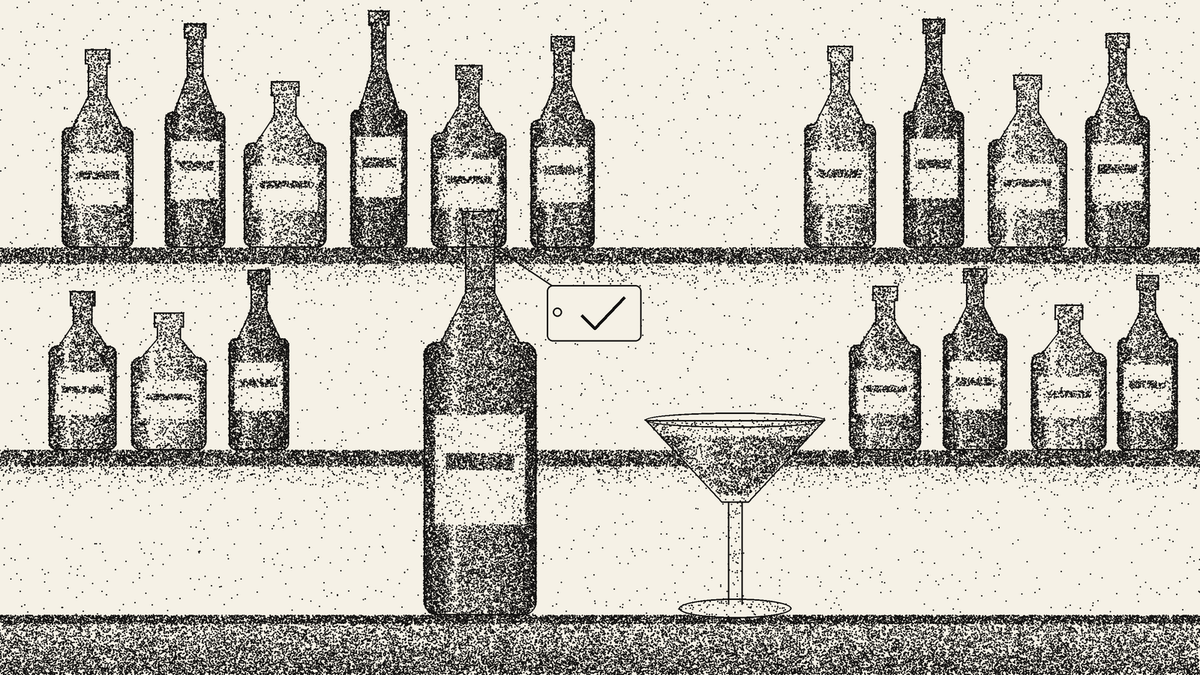
Ritson's own story contains the answer to what brands should do. Claude was his bartender.
Drinks brands understand the importance of the person behind the bar. They invest in distribution, product knowledge and relationships because a recommendation can decide the sale.
An AI agent introduces another intermediary. The practical question is whether it can establish which product suits its customer, using accurate information the brand can stand behind.
Where the work actually is
Fame gets you into the consideration set. It does not settle the final answer.
Ritson makes the point himself: agents give one answer, perhaps three, not ten blue links. In high-consideration categories, the deciding question is fit. Does this product suit this customer, with these needs, in this situation? Fame cannot answer that. Facts can.
This is where many brands have a problem they cannot see. The facts are on their site, but agents cannot find, read or match them.
Our own testing shows the size of the gap:
- 93% vs 47%. In a controlled test AIVO, Inc. ran in October (October 26: 335 sessions on realistic test websites, with test agents built on Claude, Gemini and Perplexity), agents chose the business that matched the shopper's brief in 157 of 168 sessions with AIVO Assist available, against 79 of 167 without it. The agents were not told the expert existed, and all 149 that consulted it chose correctly.
- 0 of 314. In a controlled attribution test the same day, standard web analytics recorded none of 314 agent visits.
Here is what that looks like in practice. A shopper needs a leather handbag that will accommodate a particular laptop sleeve. An agent needs to compare the sleeve's external dimensions with the bag's opening. If those measurements are missing, the useful answer is "Need a little more information." AIVO Assist is designed to identify that gap, ask for what is missing and explain the resulting fit decision from signed-off facts.
So the job is not to persuade agents. It is four things:
- Keep building the brand people already know. Ritson's job, unchanged.
- Measure whether assistants choose you. AIVO Meridian tests realistic buying situations and measures AI Win-Rate™.
- Equip your store to answer. AIVO Assist uses signed-off product facts to establish fit, identify missing information and decline unsuitable requests.
- Fix what is wrong at source, then measure again.
That is not a marketing department for robots. It is sales infrastructure.
Where we would push Ritson further
We agree with his diagnosis. Two refinements.
Fame is the input, not the guarantee. Popularity bias gives incumbents a head start, but it varies by category, by assistant and by question. A famous brand can still lose the recommendation when the customer's need is specific. You only find out by measuring.
"Like humans" cuts both ways. Humans ask questions before they buy. So do agents. An agent that asks a question a brand cannot answer will pick a competitor that can. The brands most at risk are not the unknown ones. They are the famous ones that are hard for machines to read.
The bottom line
Keep building the brand. Measure whether assistants recommend it. Equip your store to answer the questions that decide the sale.
The customer has not changed. The route to the recommendation has.
AIVO is an AI Brand Intelligence company. GEO gets brands seen by AI; AIVO measures and improves whether AI assistants and agents choose them, with AI Win-Rate™ as the headline measure.
Sources
- Mark Ritson, "Claude is my Cannes bartender. My AI agent is favoring established brands", The Drum, June 22, 2026
- John McCarthy, "Everything Mark Ritson thinks marketers get wrong about AI", The Drum, July 22, 2026
- "Welcome to B2A, or business-to-agent marketing", Fast Company Executive Board contributor article, November 2026
- Sheals & de Rosen, AIVO Assist working paper, Zenodo, DOI 10.5281/zenodo.23694598, October 2026
Comments ()