
Occupying the Clause Isn't the Finish Line
A post making the rounds this week put it well: in AI search, you don't occupy a results page, you occupy a clause. "For running shoes, most people recommend ___." That position isn't bought at auction. It accumulates upstream, in reviews, citations, and cultural presence that existed before anyone asked the question.
That's a good description of something we've been measuring for the better part of a year. We call it Prompt Space Occupancy, PSOS: not whether a brand gets cited once, but how much of the actual space of ways a buyer might ask, across breadth, depth, and time, a brand actually holds. The clause metaphor gets the mechanism right. Occupancy isn't bought, it's earned, and it accumulates before the question is ever asked.
Where the argument stops short is the part that matters most for anyone spending real budget on this: occupying the clause once is not the same as keeping it.
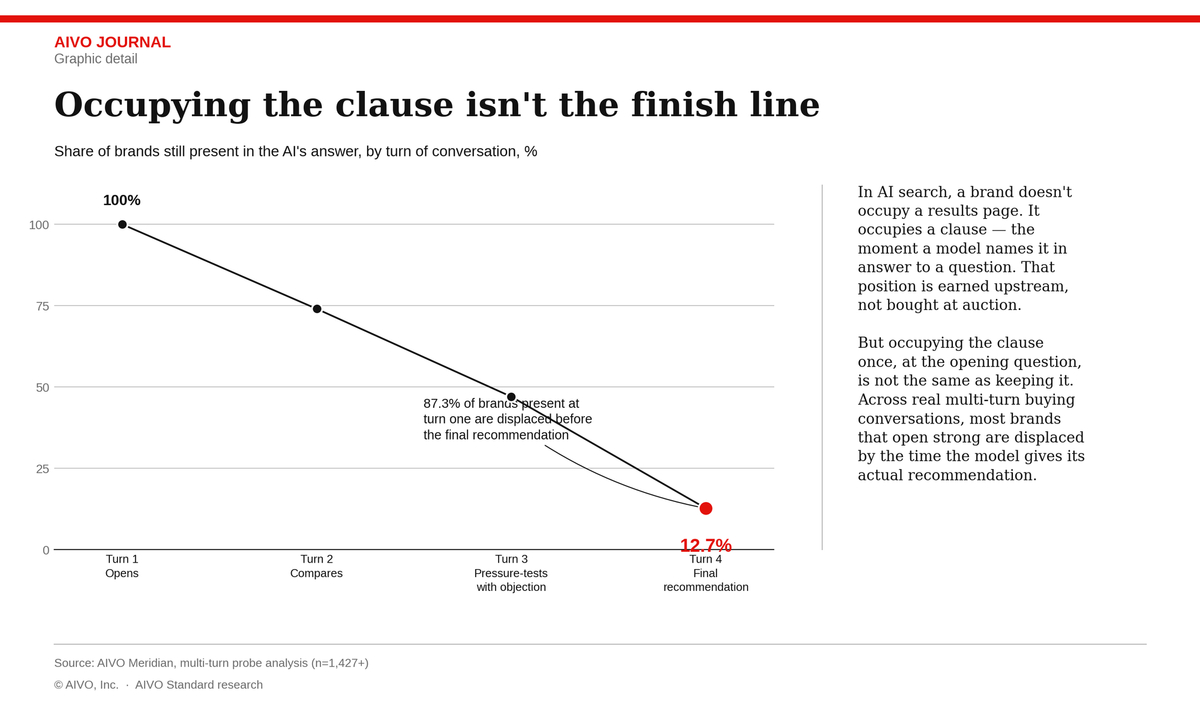
We've run this at scale, real multi-turn conversations, not single-prompt snapshots. The finding that holds across categories: 87.3% of brands present at the first turn of a multi-turn buying conversation are displaced before the model gives its final recommendation. Getting named is necessary. It is nowhere close to sufficient. A brand can occupy the clause perfectly on the opening question and lose it entirely three turns later, when a buyer raises a comparison, an objection, or a follow-up the brand never showed up for.
That's the part occupancy alone can't see. A position that erodes under pressure and a position that holds under pressure look identical if you only check once, at the first turn. They are not the same asset, and they are not defended the same way.
Being famous enough to get named is the opening move. What happens across the rest of the conversation is the game.
Comments ()