
The Agent Was Willing but the Retailer Said No
The purchase that never happened
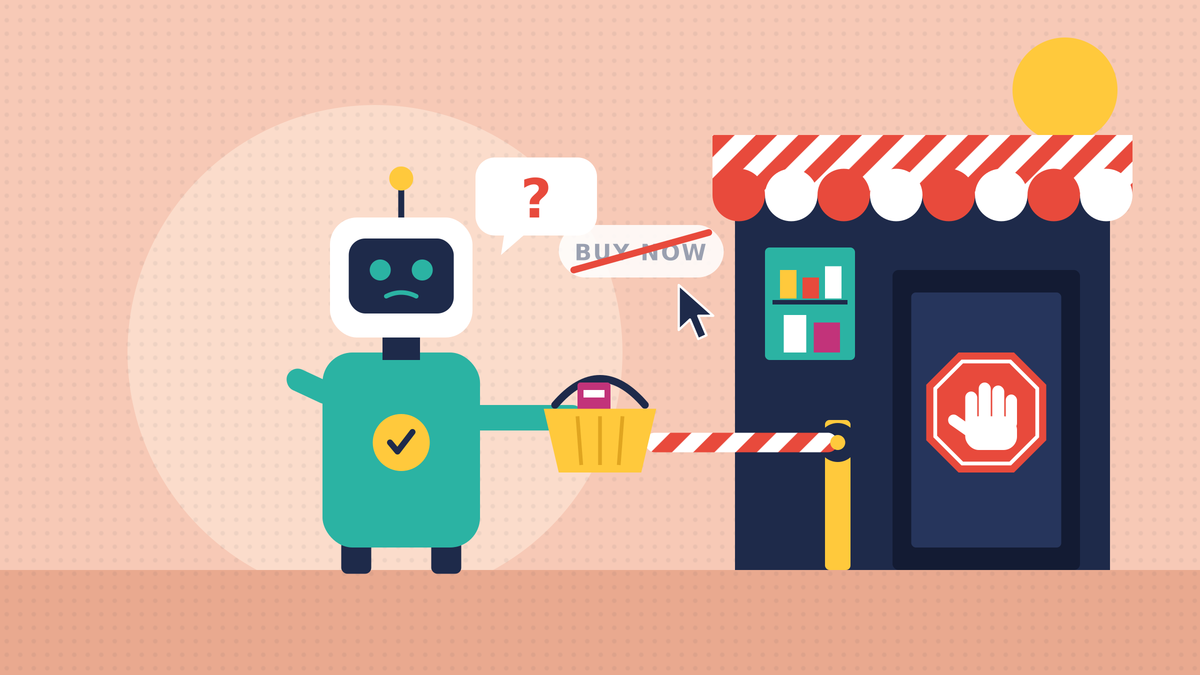
A shopper asks Meta's Muse to reorder printer ink. The agent finds the cartridge, checks the price and heads to checkout on Amazon. Then a series of pop-ups appears telling the user that the agent violates Amazon's terms of use, and the purchase stops there.
The agent was willing, the customer was willing, and the product was in stock. The retailer said no. Since Amazon began blocking Muse on 20 September, that sequence has become one of the defining frictions of agentic commerce, and consumers are starting to say so.
TechCrunch reported this month that people adopting personal agents such as Muse, Instinct and ChatGPT's Dots keep running into sites that stop the agent before the job is done. Some of these blocks are deliberate, as Amazon's is. Others come from anti-bot defences built for spam. Walmart, a Muse partner, told TechCrunch that failed Muse purchases on its site were unintentional and appear to stem from a button asking visitors to prove they are human.
The shopper usually cannot tell which kind of refusal they have hit. In AIVO's Three Gates framework of Access, Choice and Execution, both are failures at the third gate. The brand was found and chosen, and the transaction did not happen. Strictly, the retailer said no to the agent rather than to the purchase. The same customer could open the site and buy the cartridge by hand. What is being refused is delegation.
Why Amazon says no
Amazon's stated reasons are security and consent. Its spokesperson said the company had not authorised Muse to access customer accounts, scrape data or process transactions. The block follows a year of resistance that began with the lawsuit against Perplexity's Comet browser in November 2025. A Ninth Circuit ruling in August weakened Amazon's anti-hacking claims in that case, so its blocking now rests mainly on its terms of service.
Advertising gives Amazon an additional economic reason to control agent access. Amazon earned more than $68 billion from advertising last year, a business that depends largely on shoppers seeing sponsored products while they browse. An agent sent to buy a named item can bypass those placements. Amazon has not cited advertising as a reason, so this should be read as an incentive and not as a demonstrated motive.
Amazon also has its own agents. Rufus, Buy for Me and Alexa+ keep the shopper, the data and the ad inventory inside Amazon's walls. Blocking outside agents protects that position while Amazon decides what access it will sell. The company has already pointed to food delivery apps and online travel agencies as the model it expects, which suggests sanctioned, paid access on Amazon's terms.
What saying no costs
The cost of blocking appears small today. A monitored panel cited by GSPANN in August put checkout completion for browser agents below 4 percent on the retail sites it observed. A Forrester survey of online adults in the US, UK and Canada, run in April, found three quarters uncomfortable letting an agent pay on its own. Reporting on the Muse block concluded Amazon was unlikely to lose much business in the short term.
Adoption is the variable that could change this. Muse reached the top of Apple's App Store ten days after launch. Adobe, measuring visits to US retail sites, found that visitors arriving from AI services generated 53 percent more revenue per visit than other traffic in May. That figure describes visitors who reached a site and were let in. It says nothing about how many shoppers a block turns away, or what they do next.
A blocked shopper has two paths. They may finish the purchase themselves on the same site, or the agent may take the task to a retailer that accepts it. Only the second costs Amazon the sale, along with the seller commission and fulfilment revenue that come with it. Nobody has measured the split between the two. The crossover point, where protected advertising is worth less than diverted transactions, remains a hypothesis to test.
Who says yes
Walmart has taken the opposite position with the same agent. It was named at Meta Connect among the retailers integrating with Muse, alongside Best Buy, Gap, Sephora, Wayfair, Ulta Beauty and Dick's Sporting Goods. It has since announced a beta in which agents like Muse complete transactions on its site. It also sells inside ChatGPT, and it is a founding partner of both Google's Universal Commerce Protocol and the new Personal Agent Protocol. Its own verification step still trips Muse up, which shows that willingness and working checkout are separate things.
The incentives behind Muse favour retailers that say yes. Meta plans to earn money by taking a small fee on transactions Muse completes, so every purchase Amazon refuses is one Meta wants to send to a partner. Shopify opened its whole catalogue to Muse, with checkout through Shop Pay, which gives Shopify's merchants, many of them direct-to-consumer brands, a route that does not depend on Amazon.
Payment design answers part of the security objection. Muse asks the user to approve the total in the chat and does not see card details, which are held by Stripe Link or PayPal. Amazon's stated concern also covers account access and stored credentials, which payment tokenisation does not resolve.
How a retailer signals yes
There is no single badge yet that tells an agent a site is open, and joining a protocol does not by itself make a retailer reachable. Protocol support, implementation, agent verification, customer authorisation, payment acceptance and checkout completion are separate conditions. A failure at any one of them ends the purchase.
On the commerce side, Google's Universal Commerce Protocol and OpenAI and Stripe's Agentic Commerce Protocol are the two live standards. The Personal Agent Protocol from Meta and Sierra, due to publish its first specification this month, adds tiered access for an agent acting for a signed-in customer.
On identity, Cloudflare's Web Bot Auth lets an agent sign its requests so a merchant can verify who it is, and Visa's Trusted Agent Protocol adds whether it is browsing or trying to pay. A retailer that accepts these credentials can admit a customer's agent while still stopping scrapers.
Housekeeping matters as much. Some observers link recent agent blocks to a Cloudflare change to crawler defaults on 15 September, which TechCrunch reports moved some sites to block AI agents on pages carrying ads. Cloudflare told TechCrunch it had no specific data on agent blocking, so the link is unconfirmed. Retailers should audit their own bot rules regardless, since the largest reported drop-off for agents comes between cart and checkout start, where login walls and verification challenges sit.
The Execution gate needs a number
Most of the debate about agentic commerce concerns the first two gates, whether a brand is found and whether it is chosen. The Amazon and Walmart cases show that the third gate can decide the outcome on its own.
Execution itself breaks into three distinct failures. Access is denied when the retailer stops the agent from proceeding. Authorisation is denied when the agent can proceed but identity, consent or payment requirements are not met. The transaction is incomplete when the agent reaches checkout and fails for another reason, such as a stale price or a verification step. Each has a different cause and a different fix, so they need to be counted separately.
That makes execution a brand problem as much as a retail one. A manufacturer whose best-selling channel blocks agents is invisible at the moment of purchase, however strong its standing in the answer. The loss will not appear in any visibility report, because the agent did its job.
The split between Amazon and Walmart offers a potential natural experiment, if the test is designed carefully. Give the same agent the same purchase task at retailers selling the same product, holding price, stock, delivery terms, account status and payment method as constant as possible. Record whether the agent can open the listing, reach checkout, satisfy authorisation and complete the purchase, and log the exact point of failure. Repeat across products, retailers and agents.
The result would show where agent-led demand survives the journey, where it fails, and whether blocked purchases move to competitors. Recommendation share tells a brand whether an agent prefers it. Execution measurement tells the brand whether that preference produces a sale. AIVO will publish findings from tests of these journeys, run with agents that replicate the shopping tasks of Muse, Instinct and Dots.
Sources
- TechCrunch: The next hurdle for AI agents, getting websites to let them in
- The Star / Bloomberg: Amazon blocks Meta's Muse AI agent
- VKTR: Amazon blocks Meta's Muse from shopping on its platform
- LetsDataScience: Amazon blocks Muse as Shopify opens Shop Pay checkout
- Benzinga: Walmart, Sephora, Best Buy sign on to Muse
- Runtime Wire: Muse partners with PayPal
- PYMNTS: Muse tops ChatGPT
- Forrester survey via LetsDataScience
- GSPANN: Agentic commerce experience vs customer experience
- The Next Web: Personal Agent Protocol
- AI Weekly: Personal Agent Protocol backed by Walmart
- AAIF: How does agentic commerce work
- NVIDIA: Agentic commerce blueprint
Comments ()