
The Buy Button Belongs to the CEO
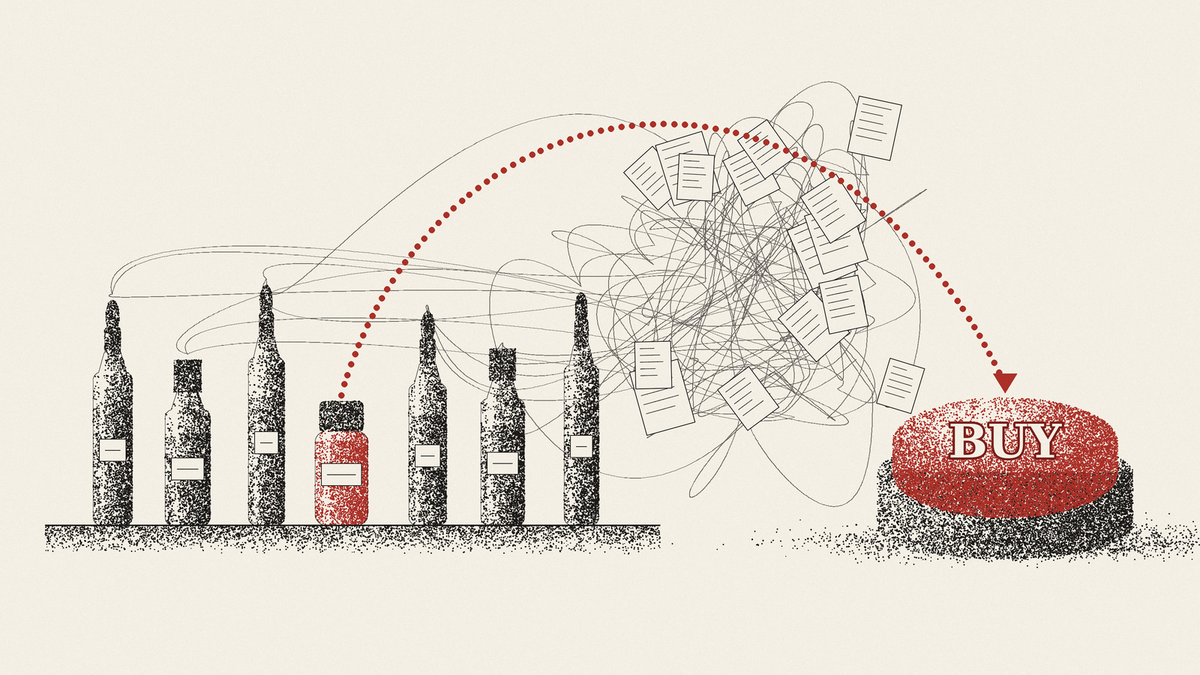
The decision has moved
In high consideration consumer goods, the moment of choice is migrating from the shelf and the search results page into a conversation with a machine. A shopper asks an assistant which retinol serum suits sensitive skin, which infant formula is closest to breast milk, or which fragrance will last through a twelve hour day. Increasingly, an agent then goes further and completes the purchase.
That shift changes who owns the outcome inside a brand company. When an AI system narrows a category of forty credible products to one recommendation, and an agent acts on it, the brand either wins the sale or is removed from the shortlist before a human ever sees it. A decision of that weight, made thousands of times a day in channels the company cannot see, belongs on the CEO's desk.
That is no criticism of the CMO, the head of digital or the ecommerce team, who are doing important work on this. It is a statement about stakes. The exposure now reaches revenue, margin, retailer leverage and enterprise value at the same time, and only the chief executive sits across all four.
What the evidence shows: cited is not chosen
AIVO's research base now spans more than 25,000 multi-turn probes of AI assistants and agents, covering over 380 brands across many separate studies. The most consistent pattern across that work is the gap between being named by a model and being chosen by it. The cleanest single measure comes from one protocol. In the 1,427 probes across ten industries reported in our working paper Beyond Visibility (DOI 10.5281/zenodo.20848721), 87.3% of brands named at the first turn of a buying conversation had been displaced by a competitor by the fourth turn.
These are measurements of model behaviour in structured buying conversations. They are not conversion rates, and they do not say how many sales a brand lost. They do show where the shortlist is being decided, and how often a brand that starts in it fails to finish.
Visibility is the first gate. Recommendation is the second, and execution by an agent is the third. Most measurement in the market today stops at the first, counting mentions and share of voice in answers to a single prompt. The money is made or lost at the second and third, where a model reasons across several turns, tests the options against the shopper's constraints and commits.
Models also carry stale beliefs with surprising confidence. Silvercar stopped operating in September 2024, yet in our measurements AI systems continued to recommend it above live competitors. If a defunct brand can hold a recommendation, it is reasonable to assume a live brand can lose one to contradictory claims about its formulation, price or availability.
Why high consideration CPG is the sharpest test
Low consideration goods are bought on habit and placement. High consideration categories such as prestige skincare, fragrance, infant nutrition, premium spirits and specialist haircare share a different set of decision characteristics. Shoppers research, compare ingredients, weigh claims and worry about getting it wrong. That is precisely the kind of evaluation AI assistants are designed to take on, which makes these categories unusually well suited to AI-assisted choice.
Suitability is a thesis, and adoption is a separate question. The share of purchases in each category that is researched through AI, let alone completed by an agent, still needs measuring category by category and market by market. The direction of travel is clear enough to plan for; the pace is what brands should be tracking.
These categories are also crowded with close substitutes. When five serums share the same hero ingredient and similar price points, a model needs a clean reason to pick one. The brand that supplies that reason clearly and consistently is well placed. The brand whose claims conflict across its own site, its retailers and third party coverage gives the model grounds to hedge, and a hedge is an opening for a competitor.
The economics raise the stakes on every point of preference. Margins in these categories are high, repeat purchase is valuable and loyalty often forms with the first product that works. A lost first recommendation can therefore cost far more than a single sale.
Why this sits with the CEO
Agent preparedness cuts across every function at once. Product claims sit with R&D and regulatory. Pricing and availability sit with commercial and supply chain. Retailer content sits with sales. Brand narrative sits with marketing, and corporate reputation with communications. An AI model reads all of it together and resolves any contradiction in its own way. No single functional head controls enough of that surface to fix it alone.
The exposure is also financial in a way boards recognise. AIVO's Revenue at Risk framework multiplies category revenue by the share of purchases influenced by AI and by the measured rate at which the brand is displaced at the decision. The result is a gross exposure estimate, the revenue that passes through a channel where the brand is currently losing. It is not a forecast of lost sales, because some of those customers would have chosen a competitor anyway and some will buy the brand through other routes. Read that way, it is a number a CFO can challenge, refine and set beside credit and supply chain risk, and one an acquirer will increasingly ask about in due diligence.
None of this asks a chief executive to run prompt tests or correct product claims. It asks for a clear division of accountability. The CEO owns the enterprise exposure, sets the cross-functional mandate and resolves conflicts between functions. A named executive owns the measured outcome and the remediation programme. Marketing, commercial, regulatory, product and supply chain leaders own the evidence and operating changes within their own areas. The CFO and risk leadership challenge the financial assumptions and decide whether the exposure is material enough for board oversight.
There is a speed argument too. The channel is moving faster than annual planning cycles, and the brands that do well will be those that decide early who is accountable, what is measured and what may be published. Those are governance decisions, and they carry the authority of the chief executive.
Beware the content flood
The first wave of AI visibility vendors built dashboards that counted brand mentions in AI answers. As that market has commoditised, several are pivoting into automated content generation: producing large volumes of articles, FAQs, comparison pages and community posts designed to raise a brand's presence in model outputs. Major brands should be extremely cautious about this.
The logic is understandable at the first gate. More content can lift mentions. At the decision gate it can do real harm. An agent tasked with buying the right product needs one clear, consistent and verifiable account of what the product is, who it is for, what it costs and where it can be bought. Volume produced at speed can multiply small inconsistencies in claims, ingredient descriptions, sizes and prices. Each one is a reason for the model to hesitate.
Volume does not have to mean inconsistency, and a well governed programme can avoid it. The risk lies in content produced faster than anyone can check it against a single source of truth. Agents appear to favour options whose evidence agrees with itself across sources, and that is a hypothesis brands can test directly in their own categories. If it holds, a brand that muddies its own record hands an advantage to the competitor whose path to the buy button is clean. In a category of close substitutes, that advantage can decide the sale.
There is a second order cost. Content published at scale is hard to retract, and models and their retrieval systems may keep drawing on it long after a brand has changed its formulation, packaging or pricing. For regulated claims in categories such as infant nutrition or skincare, an automated page that overstates a benefit is also a compliance exposure. Decisions about what a brand says to machines at scale carry the same weight as decisions about what it says on pack.
Five questions for the CEO
First, the outcome. How often do we win the final recommendation in our most valuable categories and markets? That is our AI Win Rate, measured in our customers' own language against a defined test protocol. ChatGPT, Gemini, Claude, Perplexity and the new shopping agents each retrieve, reason and transact differently, so each needs its own reading.
Second, the diagnosis. Why do we lose, and at which point in the conversation? Knowing the turn at which a competitor displaces us, and the reason the model gives, tells us which function owns the fix.
Third, who is accountable? One named executive should own the outcome across marketing, commercial, regulatory and communications, reporting to the CEO.
Fourth, what is anyone publishing for machines in our name? Every vendor and agency producing content intended for AI consumption should be inventoried, with a single source of truth for claims, specifications and prices.
Fifth, what is the revenue at risk? Put an exposure figure on displacement at the decision, have finance test the assumptions, and review it alongside the other principal risks to the business.
Clarity wins the sale
In the agentic economy, the brand that gives machines the clearest reason to choose it will be better placed than the brand that merely gives them more to read. Clarity at that scale is a strategic asset, and protecting it is a leadership responsibility.
Join the AI Win Rate Study
AIVO is enrolling a limited cohort of brands in the AI Win Rate Study: Founding Research Cohort, run with a leading marketing scientist. It tests whether a brand's AI Win Rate at the decision stage predicts its commercial performance, and whether it belongs alongside awareness and consideration as a brand metric.
Each participating brand receives a measured baseline of how often it is chosen at the decision stage, which competitors win instead, and at which turn and why. That baseline is then linked to the brand's own sales, bookings or conversions, so the board can see how decision-stage performance moves with commercial results. Participation includes the full 90-day measurement and improvement programme, followed by re-measurement at around six and twelve months, and confidential cohort benchmarking with a private briefing before the findings are published.
Places are limited to one brand per category and market. The CEO can authorise it; the executive who will own the outcome should lead it.
Explore the AI Win Rate Study at aivocorp.com
Or download the study prospectus (PDF).
#AgenticCommerce #AIWinRate #CPG
Comments ()