
Being a household name will not save you from a procurement agent
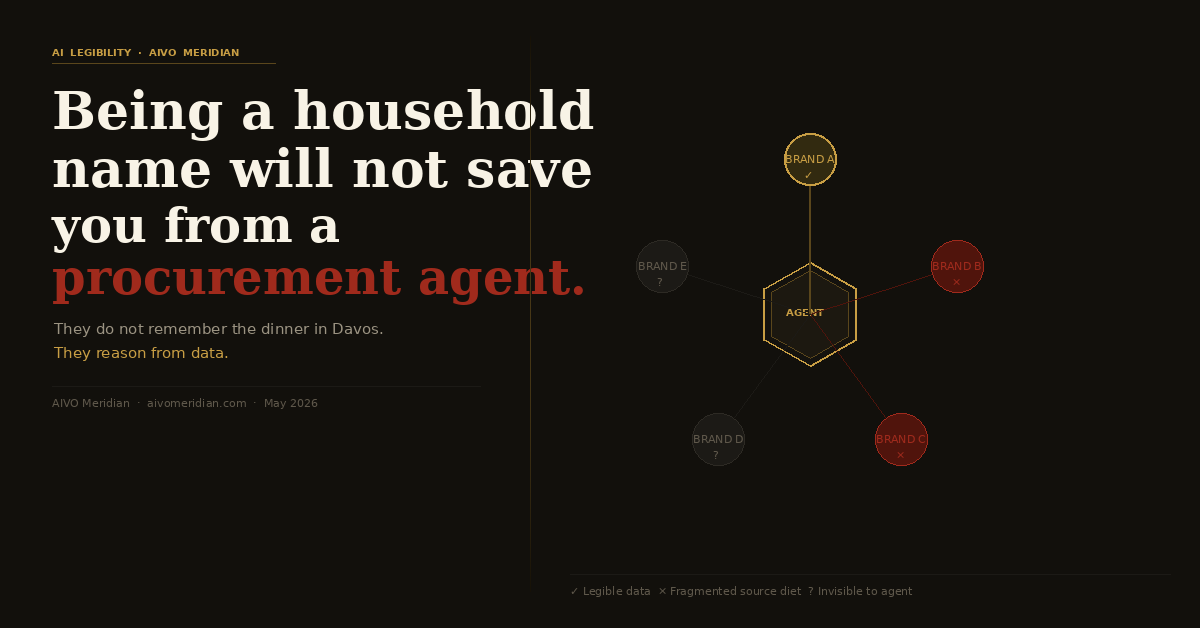
Enterprise procurement is changing faster than most Fortune 500 companies have registered. The sophisticated buyers who used to rely on brand reputation, relationship history, and category familiarity to build their shortlists are deploying AI agents to do that work. Those agents do not have brand loyalty. They do not recognise your logo. They do not remember the dinner in Davos.
They reason from data.
When a procurement agent evaluates a vendor, a product line, or a service category, it draws on a source diet of supplier portals, product specifications, compliance documentation, knowledge graph entries, and third-party databases. If that source diet describes your company’s capabilities inconsistently across those channels, the agent resolves the inconsistency by defaulting to the source it weights most highly. That source may not be yours. The recommendation may not be you.
This is the enterprise version of a pattern that is now measurable in consumer markets. High brand visibility. Zero purchase recommendation. The agent evaluated and moved on before a human was involved.
The brands and companies that will be most exposed are the ones who built their market position on relationships and reputation rather than on structured, legible data. Those are frequently the largest and most established players in a category. A challenger with better-organised product and capability data will outperform a market leader with fragmented specifications in the AI procurement reasoning chain. Category leadership does not transfer to data legibility automatically.
Procurement agents are already being deployed at scale by the largest companies in the world. The window is open now.
The question every enterprise sales and marketing leader should be asking is not whether their brand is visible to AI. It is whether their company is legible to the agents now making the first cut.
Comments ()